
A World-Historic Chance

The Right is freaking out because we could be on the brink of proving that egalitarian, pluralistic democracy is possible. A glass-half-full interpretation of our moment.

By Thomas Zimmer, July 13, 2026
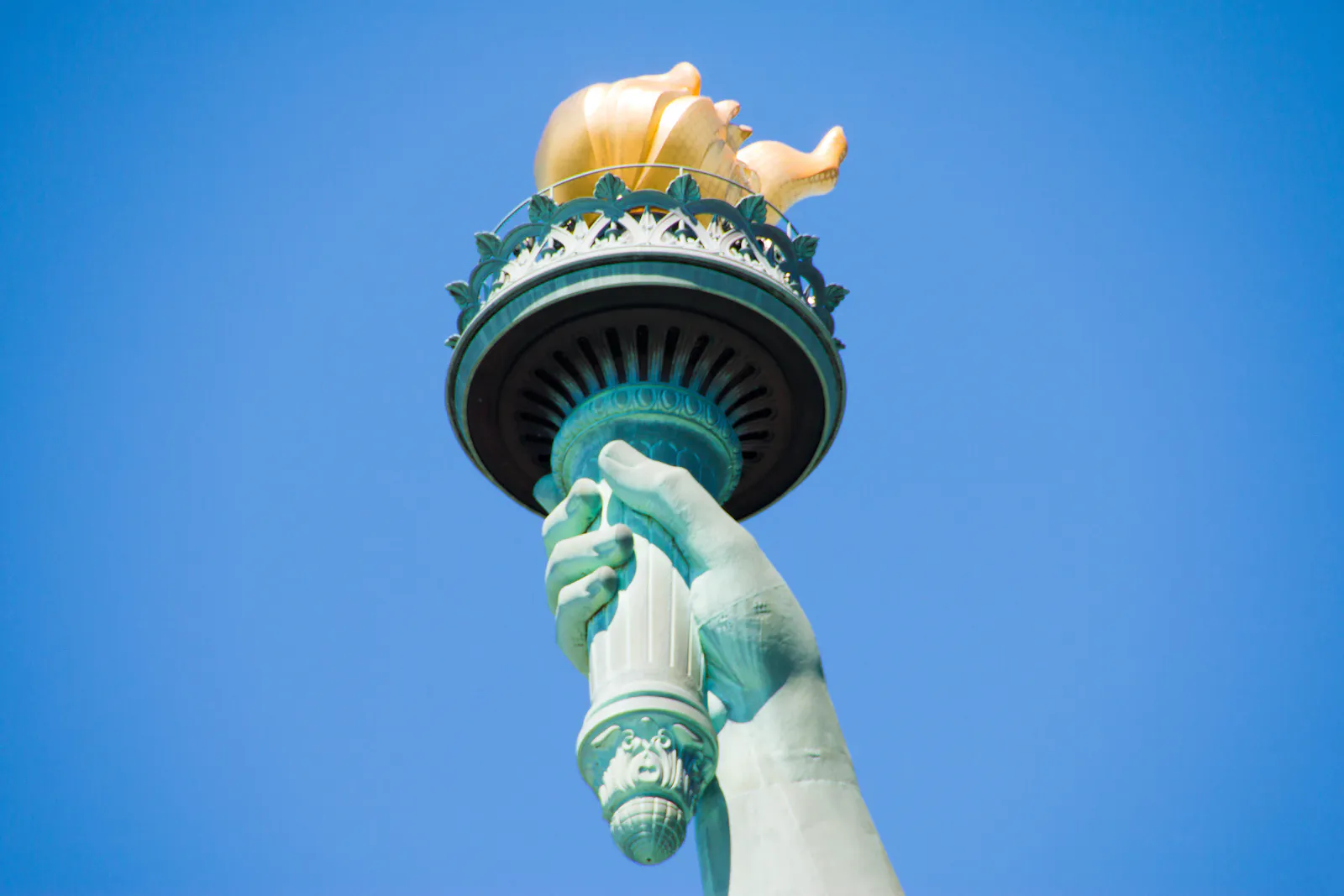
credit: evenfh / iStock

I initially published this piece as a member-exclusive essay. But I am taking down the paywall for this one, as I believe it remains relevant as a potential antidote to cynicism and declinism.

Let me remind you that I have launched a version of this newsletter in German. Same content, same analysis – only in German. If that is of interest to you, head over to Demokratie Americana (Opens in a new window) (where all pieces should be available within a few hours of publication on here). Please help me spread the word!

Also: Please support Democracy Americana!

Democracy Americana is my main source of income as an independent writer. If you are reading the free version of this newsletter, I sincerely appreciate your time and effort engaging with my work. Please share it widely to help me reach new readers.

And if you can, please consider becoming a paid member. You will gain access to special benefits – including many additional essays and the chance to download the audio versions of all my pieces in podcast form.

Most importantly, Democracy Americana is a publication solely funded by readers. I need your support to continue this work. Thank you!

Not ready yet for a paid membership? You can subscribe to the free version of the newsletter:

This moment will stick with me for a while. Last week, I was invited to give a talk at the “Academy by the Sea” on Sylt, the largest of Germany’s islands in the North Sea. The Academy is part of a network of adult education centers across the country, offering people the chance to enroll in a large variety of courses or engage with any topic imaginable via public lectures and events. My talk was scheduled as an evening lecture as part of the Academy’s summer program. Enrollees spend several days, perhaps even weeks at the Academy, which is located in the island’s northwest, far away from Sylt’s busy, overly crowded tourist hotspots; it is nestled in the dunes, feels beautifully secluded from the rest of civilization, with direct access to miles and miles of some of the most gorgeous beaches you’ll ever see.

To be honest, I almost felt bad about giving my talk – to force people who come to the island to combine vacation and education to think about Donald Trump. Or rather: Where Trump’s rise sits in the larger context of U.S. history. For 45 minutes I talked about the struggle over national identity and who gets to define “America,” who gets to belong, and who gets to be included in “We the People.” And as you might imagine, it wasn’t exactly an uplifting conversation. The discussion went long; we were about two hours in when the Academy’s director wanted to call it a night. But that’s when a woman sitting in the first row, right in front of me, spoke up. I had noticed several times throughout my talk that she was visibly wrestling with the story I was presenting, clearly affected by what I was describing. And now she insisted that we couldn’t possibly end like this – after several questions dealing with the Supreme Court, and tech elites, the extremists who will come after Trump, and the so-called liberal international order that all prompted me to emphasize that there was not going to be a return to “normalcy” anytime soon, that America was going to face the challenge to rebuild and reconstruct (rather than merely restore) if and when Trump was finally removed from power. No, I couldn’t possibly release everyone into the night like this. She demanded I give the audience something else: There had to be something people could do, something to carry us all forward?

I admit my instinct normally is to reject these kinds of questions. I try hard not to overstep and stick to my actual expertise. I am not a politician; I don’t have any experience in organizing or political activism. I offer my analysis and hope to contribute to getting the diagnosis right, for whatever that’s worth. But in this moment, perhaps because the setting was so distinct from the kinds of environments where these talks usually take place, I did feel an obligation to offer something more. Not some clearcut answers I don’t possess, or simplistic recipes dressed up as “lessons from history,” and certainly not some willfully naïve progress gospel. But a reminder that the situation is not hopeless – that there is, in fact, a glass-half-full interpretation of our moment in world history. That we could be, as dangerous as this situation is, on the brink of proving, perhaps for the first time ever, that a truly democratic society under conditions of multiracial, multi-religious, gender-egalitarian pluralism is indeed possible. 

And so, I made my case: The anti-democratic radicalization of the Right has not been fueled by a sense of strength, but by a pervasive sense of weakness. They are feeling their backs against the wall. And they are reacting to something real: Our “Western” societies have indeed become more pluralistic, less white, less overwhelmingly Christian. In that sense, it was not the perfectly stable liberal democracy that suddenly fell into crisis (because such an order had never existed), but white Christian patriarchal dominance – what the Right likes to call the “natural order” – that has been coming under pressure.

The fact is that reality has been moving away from those who refuse to imagine “America” as anything other than a land defined by white Christian patriarchal domination. And no matter how loudly they insist to be representing the “will of the people” in pushing back against these developments, their reactionary ideas are opposed by a stable majority. According to the latest survey conducted by the Public Religion Research Institute (PRRI) and published under the title “Competing visions of America at 250,” (Opens in a new window) almost two thirds of Americans prefer religious pluralism over the idea of a Christian nation; almost eight in ten Americans want the country to be a racially diverse nation with people from all over the world as opposed to a nation of and for white people “with Western European heritage.”

These are impressive numbers, from a high-quality study and confirmed over and over again in other survey data. The clear majority don’t want to live in MAGA land. 

Such data needs to be contextualized, certainly. We must wrestle with what it can and cannot tell us about the political and societal conflict, with how to relate it to the MAGA regime’s brutal rollback of racial and social progress and to broader tendencies of a reactionary sentiment in matters of race and gender beyond just the MAGA Right that have shaped American society recently.

But we must not dismiss these clear indications that a strong majority of Americans is opposed to MAGA’s war on pluralism. If we do, we not only fail to understand that the key threat emanates from a radicalizing minority. We also fail to counter the ubiquitous sense of decline and the temptations of despair and cynicism by reminding ourselves that we are confronted with a world-historic chance. In a way, we have never been closer to finally realizing the promise of egalitarian democracy that is entailed in the idea that “all men are created equal.”

So, let us grapple properly with the survey data that seeks to capture the majority’s affirmation of pluralism, with the countervailing forces of reaction and resentment that are tearing America apart – and let me try to make the best possible case that the glass is actually half-full. 

Reaction, retrenchment, dealignment

If you have been following my work for any length of time, I hope you won’t suspect me of being naively optimistic or unduly sanguine about the political situation in the United States. Almost every piece I write, almost every interview I do revolves around the radicalization of the American Right as the core threat to democracy and the rule of law – and about how much mainstream observers have ignored, downplayed, and underestimated it for far too long.

Unfortunately, the leaders of the political mainstream have mostly clung to the idea that the best way to handle this ongoing radicalization is to parrot the Far Right on immigration and “culture war” issues as if we didn’t have mountains of empirical evidence that adopting far-right positions and rhetoric only ever helps the Far Right. 

This disastrous course of action has not only been fueled by tactical considerations, but also by reactionary impulses that transcend the Far Right. A pervasive anti-“wokeism” has taken hold of the political imagination from the Center-Right all the way to many corners of the Left. Even before Trump returned to power, it was undeniable that America had entered an anti-feminist backlash and a general moment of racial as well as cultural retrenchment.

Finally, recent election across the “West” have proven how large the reservoir of anti-system voters is, how much the electorate is defined by an anti-elite sentiment and distrust towards established political institutions (Opens in a new window) – which very much includes both major parties (Opens in a new window). This provides fertile ground for those who promise to demolish the “liberal” order. Even beyond those who are ideologically attracted to such a hierarchical vision, the Right’s project appeals to a sense of discontent and disaffection – to those who may feel that any revolution is better than maintaining the status quo or perpetuating “the system.”

This piece is now free to read for everyone.

But recently, only paywalled pieces have generated new memberships and thereby revenue. I am hoping we can buck the trend so that I can keep publishing free essays like this one regularly. That is crucial for the long-term viability of this publication, as it is the only way to achieve visibility and thereby reach new readers.

Please help me by supporting Democracy Americana with a membership:

Affirmation of progress and pluralism

But as much as it may often seem that way, these intersecting tendencies of reaction and discontent are not the only forces shaping America today. Two things are true at the same time. The recent reactionary retrenchment is real and eminently dangerous. The percentage of people who believe America has become “too soft and feminine,” (Opens in a new window) for instance, has been on the rise (though almost exclusively among Republicans, it should be noted); according to Gallup (Opens in a new window), the support for same-sex marriage has decreased by six percentage points since 2023 (from 71 to 65 percent); and the percentage of people who, as Gallup framed it, agree that “gay or lesbian relations are morally acceptable” has gone down from 71 in 2022 to 62 today.

However, it is important to contextualize these most recent trends by widening the time horizon. For instance, in 1996, only 27 percent of people believed that “same-sex marriages should be valid” – before support rose steadily until it peaked at over 70 percent in 2022/23. We see a similar trend when it comes to lgbtq+ rights: According to Gallup (Opens in a new window), only 40 percent of people considered gay or lesbian relations to be “morally acceptable” in 2001. That number went up to 71 percent in 2022, before support started to decline slightly.

I am not trying to tell you that the recent trend isn’t deeply concerning. But let us remember that only a minority stands behind MAGA’s assault on the rights and dignity of anyone they define to be lesser somehow, anyone who deviates from what they want to impose as the “natural” order of white male Christian domination.

I hope we have all moved past the point of falling for the assertion that “real America” is with Trump. Everything about this MAGA regime is unpopular. That starts with the wannabe-tribune of the people himself. Under 40 percent (Opens in a new window) of Americans approve of the job he’s doing as president, and that number is trending down. A majority of the population doesn’t just “disapprove” of Trump: According to the latest PRRI survey, almost 60 percent agree that “President Trump is a dangerous dictator whose power should be limited before he destroys American democracy.”

It is not just Trump himself the majority of Americans doesn’t like, his policy agenda is also vastly unpopular. On basically every single issue (Opens in a new window), a majority disapproves of what this government is doing – and that includes Trump’s handling of the economy and immigration, where he had strong approval ratings coming into his second term.  

Crucially, the rejection of the core tenets of MAGA goes much deeper and extends to the broader vision of and for the country today’s Right wants to impose. This is what is so striking about the results in the “Competing visions of America at 250” report PRRI just released. If you are unfamiliar with the work of PRRI, which was founded in 2009, trust that they produce high-quality surveys that stand out because they are not so much concerned with the day-to-day political business, but aim at exploring the underlying attitudes, values, and shifts in national identity. This latest survey was conducted among a representative sample of over 5,000 adults from all 50 states; interviews were conducted online between May 1-18.

Consider the image of the country MAGA propaganda wants to present as “real America” – an image too often perpetuated by mainstream media outlets devoted to the idea that Trump somehow has a special connection to “regular folks” and channels something profound about what “the people” want: Americans are fed up with the multicultural madness that is being imposed on the nation by “globalist” elites; they desire an America that affirms its white Christian heritage rather than sacrificing it at the altar of “woke” radicalism; they don’t want the country to be overrun by strangers and foreigners from all over the world and instead demand to be living amongst people who look like them (white), pray to the same (Christian) God, and share the same cultural background… Now look at how these ideas compare to the reality that is captured in the PRRI survey – how stark the contrast is between Americans as they exist in the feverish minds of the Trumpist Right and the majority of people who call this country home.

We should all carry these numbers like a shield:

Religious pluralism or a Christian nation? 64 percent prefer “the U.S. to be a nation made up of people belonging to a wide variety of religions” – as opposed to only 34 percent who prefer “the U.S. to be a nation primarily made up of people who follow the Christian faith.”

A nation defined by racial, ethnic, and cultural pluralism or a white, “Western” country? 77 percent say they want America to be “a nation made up of people from all over the world” – as opposed to just 20 percent who “prefer the U.S. to be a nation primarily made up of people of Western European heritage.” 

“What does it mean to be American?” PRRI asked all the participants. Coming in with near-unanimous support: “Believing in individual freedoms (93%), the Constitution (91%), and the Declaration of Independence (88%)” as well as “accepting diverse backgrounds (89%).” But what about being Christian? Just 43 percent. And the “Western European heritage” MAGA’s leaders are so obsessed with? Just 23 percent of people agree that it is important to “being truly American.”

No matter how you slice it and dice it: The notion that the 2024 presidential election was some kind of referendum that produced the eternal “will of the people,” or that Trump’s victory was the result of a lasting rightward realignment, that it should be interpreted as a “mandate” to remake the Republic, is utterly untenable. When Americans are asked directly about matters of national identity, about what they believe the nation is supposed to be, about the values and ideas that should define it, about who gets to belong, it becomes obvious that the country is deeply divided – but it is not a 50:50 split. Today, America is much more adequately described as a two-thirds/one-third nation, with the larger share of the population firmly in the camp of pluralism.

MAGA’s leaders are scared

MAGA America is a minority project, its core tenets vastly unpopular with a clear majority of the people.

And deep down, the Trumpist leaders know this, even if they don’t want to admit it, perhaps not even to themselves most days. Maybe there was a phase of drunken euphoria after Trump’s election victory, extending into those first few months after his return to power when resistance was slow and ineffective, when they forgot; but as societal resistance has been hardening considerably, they must have remembered that they are facing a majority that is affirming and protective of pluralism, in a society that has been pluralizing and liberalizing for decades.

Forget, for a moment, the established narrative about the inevitable rise of “rightwing populism”: These are not people who act like they are feeling strong and confident. They are constantly trying to project strength, yes: They want us to believe they represent a vital, virile alternative to anemic liberal democracy – and a cohesive vision far superior to weak, divisive pluralism.

But right underneath the propaganda surface, rightwingers are also obsessed with their own weakness. The Trumpist imagination is defined by a sense of besiegement: Powerful enemies everywhere, anti-American forces both from without and from within conspiring to destroy the nation. Relentless self-victimization – a veritable persecution complex – has been a defining feature of Modern Conservatism since its inception. The heightened version of this type of siege mentality we are seeing now points to something that is diagnostically important: Until very recently at least, the Right was indeed losing the fundamental struggle over what kind of country “America” should strive to be.

Socially, culturally, and – most importantly, perhaps – demographically, the country has moved away from the rightwing ideal since the middle of the twentieth century. It is not just a figment of the reactionary imagination that America has become less white, less religious, and more pluralistic in basically every dimension. As a result, the conservative hold on power has become tenuous. In a narrow political sense, they may be in charge right now – in the White House, in Congress, at the Supreme Court. But it is not just political power the Right seeks. They desire cultural domination and affirmation. In the cultural sphere, the public square, and across many societal dimensions like the family, the shift in power away from white male conservatives has been more pronounced.

The Right has engaged in a comprehensive countermobilization in response – a radicalization fueled by an escalating siege mentality that was the reason why the Right united behind Trump in the first place. The reactionary intellectual sphere expressed this sense of panic and besiegement most clearly. Shortly before the 2016 election, for instance, Michael Anton, who rose to the position of Director of Policy Planning in the State Department in the second Trump administration, channeled this perception in an infamous essay published in the Claremont Institute’s online magazine, titled: “The Flight 93 Election.” (Opens in a new window)

It is undoubtedly one of the core texts of Trumpism. Anton called on conservatives to unite behind Donald Trump – the Right’s last best hope of defeating Democrats who, according to Anton, constituted a threat to America akin to the terrorists of 9/11. The Republican establishment had failed to stop them; far more radical measures were needed than what a “normal” conservative politician was willing to even consider. Trump, however, was different: “Trump, alone among candidates for high office in this or in the last seven (at least) cycles, has stood up to say: I want to live. I want my party to live. I want my country to live. I want my people to live. I want to end the insanity.” Since Trump, in this interpretation, wasn’t bound by norms, traditions, or precedents, he alone could be counted on to do whatever was necessary to fight back against the “wholesale cultural and political change” - to “charge the cockpit,” in Anton’s crude analogy, like the passengers of United Airlines flight 93 on September 11, 2001, one of the four planes hijacked by terrorists: It never reached its target and crashed into a field in Pennsylvania, as the passengers decided to fight back. In many ways, the “Flight 93” mentality has completely taken over the Right – it is now all “Flight 93” politics, all the time.

However, the first Trump presidency did not bring about the comprehensive undoing of all the racial and social change the Right disdains so much. Instead, it ended with millions of people protesting against racist police violence in the wake of the murder of George Floyd. On the Right, the mass mobilization of a multiracial coalition was not seen as a glimpse of a desperately needed racial reckoning, but instead as the harbinger of national doom. The summer of 2020 was yet another in a series of inflection points that further escalated the perception of imminent threat and loss, of being overrun. It has become a key element of rightwing political identity to regard the protests as irrefutable proof that radically “Un-American” forces of “woke” extremism were rising, that “the Left” had started its full-on assault.

And then Joe Biden “stole” the 2020 election. Or, if he didn’t steal it outright, that was even worse somehow. Because it proved, as Glen Ellmers, another Claremont-affiliated far-right thinker put it in an infamous essay published in the spring of 2021 (Opens in a new window), that democracy itself subverted the will of “the people” by allowing a supposedly illegitimate coalition to pursue its fundamentally “anti-American” project. This only strengthened his conviction that the forces seeking to destroy “authentic America” were rapidly gaining ground. In his view, everyone who voted for Joe Biden and his “progressive project of narcotizing the American people and turning us into a nation of slaves” was simply not worthy of inclusion in the body politic. Ellmers declared that “most people living in the United States – certainly more than half – are not Americans in any meaningful sense of the term.” This was a desperate situation that required radical measures: “Conservatism is no longer enough,” the title of Ellmer’s essay, quickly became the rallying cry on the Right. Ellmers demanded to redraw the boundaries of citizenship and exclude over half the population. For “authentic America” to survive, he was sure, a different kind of leader had to emerge: “What is needed, of course, is a statesman who understands both the disease afflicting the nation, and the revolutionary medicine required for the cure.”

During the Biden interregnum, the notion that conservatism was obsolete in a world in which there was nothing left to conserve became fully hegemonic on the Trumpist Right. As the radical “Left” had taken over all the major institutions of American life and had already ravaged what had been good and noble, there was so little time left to for the comprehensive “counterrevolution” that was needed to save the nation.

That is exactly the sentiment that animated all the planning operations on the Right during the Biden years. As Kevin Roberts, the president of the Heritage Foundation, put it in his Foreword to Project 2025’s policy report (Opens in a new window): “Every hour the Left directs federal policy and elite institutions, our sovereignty, our Constitution, our families, and our freedom are a step closer to disappearing. Conservatives have just two years and one shot to get this right. With enemies at home and abroad, there is no margin for error. Time is running short. If we fail, the fight for the very idea of America may be lost.”

Paranoid in power

While the wannabe-intellectual leaders of the Trumpist Right are publishing treatise after treatise drenched with rampant anxiety, the rest of the movement delivers more evidence every day that MAGA continues to exist in a constant state of fearfulness and imagined emergency even as they are in charge of the government.

Over the weekend, for instance, far-right pastor Dale Partridge shared what he presented (Opens in a new window) as a harrowing experience with his large online following: “What radicalized me today? My flight from Austin to Phoenix had a DEI female captain, two gay male flight attendants (one barely spoke English), we had insane turbulence (people clapped when we landed), and I was surrounded by foreigners.” Notice that absolutely nothing unusual or threatening happened to this grown man who calls himself an “aspiring general in the culture war” in his bio on Ex-Twitter. And yet somehow, he isn’t embarrassed to tell the world that he was frightened during a regular Southwest Airlines flight because it put him in proximity to human beings who don’t reflect his exact image back at him.

Or look at the collective freak-out on the Right in reaction to the Supreme Court narrowly confirming that the Fourteenth Amendment still exists and indeed says what it plainly says, therefore refusing to let Trump nullify birthright citizenship via presidential executive order. This simple affirmation of the status quo that has existed since the late 1860s is being widely treated as a DEFCON 1 situation. Media activists (Opens in a new window), Republican elected officials (Opens in a new window) and nativist agitators like Stephen Miller (Opens in a new window) quickly converged on the idea that the only way to save America now was to bar pregnant foreigners from traveling to the United States. Many on the Right went much further still. Sean Davis (Opens in a new window), the CEO and co-founder of the rightwing magazine The Federalist, suggested it might be better to “deny entry to all female foreigners” – or, actually, “require sterilization of all foreign visitors prior to entry.”

If, at this point, you are wondering how any adult person in their right mind could possibly allow themselves to indulge such whiny-totalitarian nonsense, remember that to a Trumpist dude there might not be a more terrifying creature on this planet than a pregnant foreigner. When rabid misogyny and nativist rage combine, you get such dreams of eugenicist terror.

What a bunch of pathetic creeps. Theirs is an empire of white male fear, panic, and desperation.

The path forward

We find ourselves in a situation that is immensely dangerous, no doubt. But the idea of a “crisis of liberal democracy” that has dominated the political and broader public discourse since at least the double catastrophe of Brexit and Trump’s first victory in 2016, tends to miss something important about this moment. If we want to understand how we got to where we are today, and grasp the central dynamic that defines the present, it is better to turn the ubiquitous crisis discourse on its head. The reason why the Right has been radicalizing is that the traditional hierarchies of race, gender, and religion are in crisis – that order of white Christian patriarchal dominance that had been left largely untouched by a rather narrowly restricted version of democracy until quite recently. In crucial ways, it is the conception of “real America” as a white Christian patriarchal homeland that has come under enormous pressure. And that is precisely why the Right is freaking out and why they are giving themselves permission to openly embrace authoritarianism.

The stakes in this moment are so high because of the world-historic significance of the current fight: Is it possible to establish a stable liberal democracy under conditions of gender-egalitarian, multiracial, multi-religious pluralism? Such a political, social, and cultural order has never existed. There have been several stable, fairly liberal democracies – but either they have been culturally and ethnically homogeneous to begin with; or there has always been a pretty clearly defined ruling group: a white man’s democracy, a racial caste democracy, a “herrenvolk” democracy. A truly egalitarian multiracial, pluralistic democracy in which an individual’s status was not determined to a significant degree by race, gender, religion, or wealth? I don’t think that’s ever been achieved anywhere. It’s a vision that reactionaries abhor – to them, it would be the end of “Western civilization.”

Unfortunately, this doesn’t mean that the reactionary retrenchment we are experiencing right now will inevitably fail. The forces of reaction might be in charge for quite some time. But let us get out of this defensive, defeatist posture that too many who should be proudly defending a vision of democratic pluralism have adopted.

When I was – rightfully! – called out and challenged at the end of my talk on the island in the North Sea last week, this is the case I tried to outline. My glass-half-full reading of our moment. I can’t really say how much of an impact it had on the audience. But I felt relieved. It felt right to end on a note of determination. To end on the notion that we may yet prove to ourselves and all future generations that it is indeed possible to build a society worthy of that grandest and noblest of ideas: That all people are created equal. A society that finally keeps its promise.

Without your support, I will not be able to continue this work. Please know that I am immensely grateful for your generosity!

2 comments

Would you like to see the comments?
Become a member of Democracy Americana to join the discussion.
Become a member