Trump’s schemes to subvert the midterms have so far failed. What happens next? A reflection on the threat as well as the limits of authoritarian escalation
By Thomas Zimmer, October 4, 2026
Please support Democracy Americana!
Only the extended intro to this piece is free to read for everyone. If you want to read more than the preview, please consider becoming a paid member of Democracy Americana, which is solely funded by readers and constitutes my main source of income.
Being an independent writer offers a lot of autonomy, which is a privilege. But it is also precarious and comes with lots of financial uncertainty. If you can become a paid member, please do. As a member, you receive many additional essays, and you gain access to the audio versions of everything I publish (members can find the audio at the end of the piece or available for download in the podcast player of your choice).
As always, the German version of this essay will be available over at Demokratie Americana (Opens in a new window) soon.
This is Part I of a two-part deep dive into the political situation in the United States one month out from the midterm elections – an attempt to answer the most urgent questions about the upcoming elections and Trump’s attempts to interfere, think through the dangers that lie ahead, and reflect on where we stand in the struggle between authoritarian escalation and democratic resilience. Part II will follow later this week.
Not ready yet for a paid membership? You can subscribe to the free version of the newsletter:
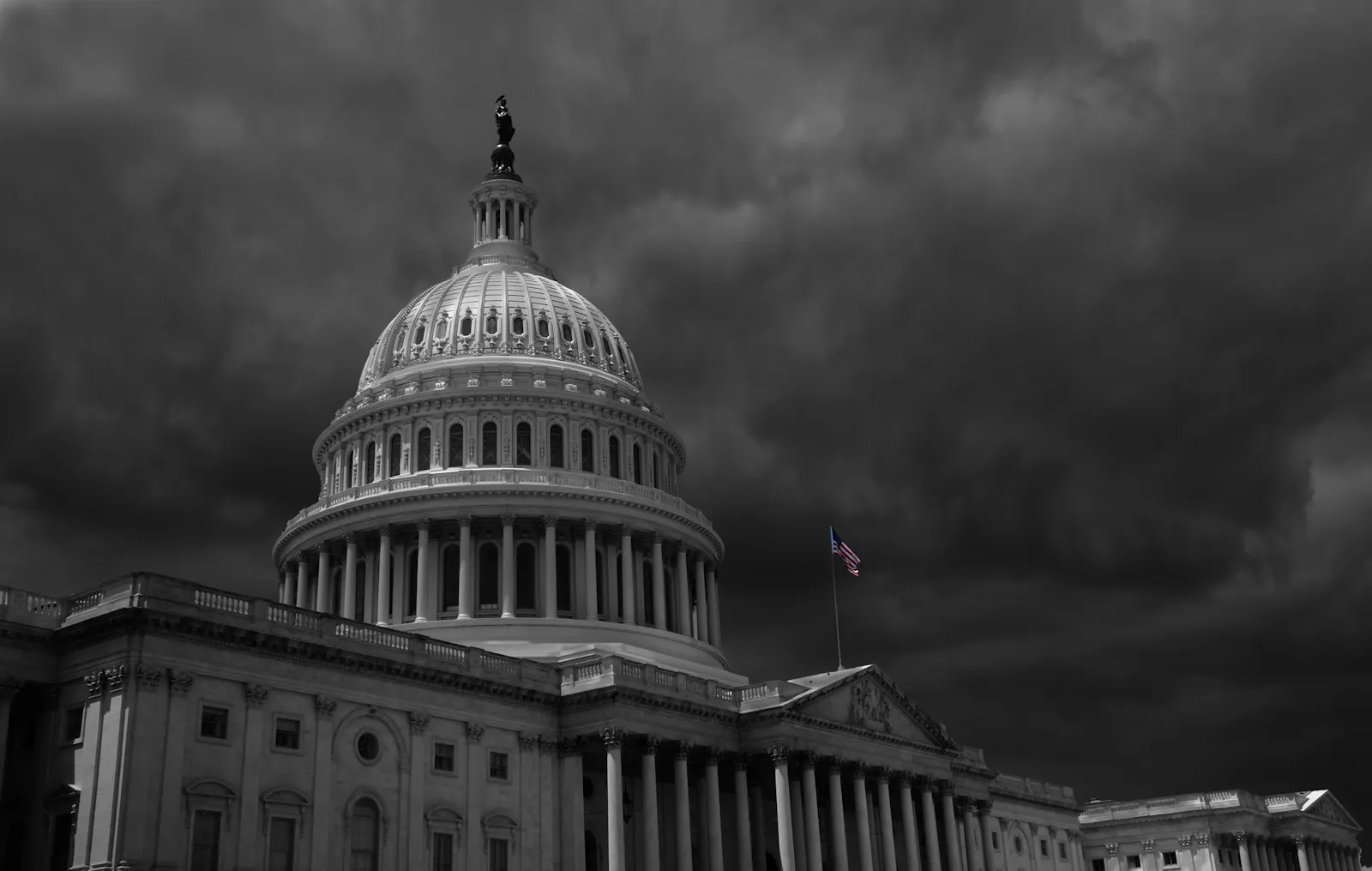
Around 2 pm Eastern Standard Time on January 6, 2021, a violent mob of militant MAGA supporters and riled-up Trump fans broke through the barriers and entered the Capitol (Opens in a new window) in Washington, DC. The insurrection was the culmination of a multi-month, multi-level scheme to nullify the results of a democratic election. It was engineered and orchestrated by the president of the United States. And in the moment, it failed.
But four years later, the insurrectionist-in-chief returned to power without ever facing any real consequences and while explicitly declaring his intent to establish a vindictive autocracy. Those who are nominally tasked with defending democracy and the rule of law had proved unable and/or unwilling to hold the line. A pervasive, system-wide failure.
On his first day back in the White House, the most blatantly lawless and comically corrupt major politician in U.S. history immediately pardoned (Opens in a new window) the January 6 mob of insurrectionists and violent vigilantes. It was the perverse apotheosis of Trumpism as a political project. Donald Trump signaled to the nation that those who commit political violence in his name would be protected and revered.
Now, that same man and his party are about to lose another major election. A defeat in the November midterms won’t end the Trump presidency. Trump himself is not on the ballot. But the stakes for the Trumpists are nevertheless high. If Democrats win at least one of the chambers, they should seek to reassert and defend the powers of Congress against the authoritarian regime, especially the power of the purse. They could also make life a lot more difficult for Trump and the people he has elevated to positions of power. Democrats may seek to impeach the president or members of his cabinet; at the very least, a series of Congressional investigations into the countless crimes and outrageous corruption of this administration should define the second half of Trump’s presidency (and hopefully create a record for future prosecution). Moreover, a clear victory for the opposition would be of great symbolic significance: The Trumpists have built their claim to authoritarian power on the myth that they represent the “will of the people,” that “real America” stands with them, that Donald Trump is the “tribune” of the “authentic” American Volk. A massive defeat in a national election would further undermine those claims.
And if the midterms are anything but a complete scam, that is what we should be expecting at this point: A massive defeat for the party of the president. According to all serious prediction models, Republicans have no realistic chance of keeping the House. They are also more likely than not to lose the majority in the Senate. The most likely scenarios we are looking at range from a brutal loss for the GOP to a nearly unprecedented wipeout.
Some part of Donald Trump must understand this too. And that means the country is in an acutely dangerous situation. Because this president and this Republican Party are obviously not willing to accept the result of a democratic election unless they emerge victorious. Trump has often and openly admitted (Opens in a new window) that he considers any democratic control of his power illegitimate. He and his rightwing allies have been trying to demonize the opposition, raging against Democrats as communist traitors (Opens in a new window) who must never be allowed to win an election, let alone govern.
What happens next? Can we even trust the polls? How certain can we be that what the prediction models are telling us is accurate? What schemes and strategies have the Trumpists already tried to subvert the election - and why have they, so far, failed? What else are they planning? What is going to happen on election day? What about the schemes to prevent Democratic representatives-elect from being seated in the House on January 3? And what are we to make of the fascist fever dreams emanating from the most extreme corners of the Right that envision Trump declaring “a national security emergency” or “martial law”?
I will try to answer, as best I can, the key questions we are facing now. The challenge is not a lack of information – rather the opposite, as we are constantly being bombarded with more polls, more reports, more revelations. The key challenge is to evaluate, contextualize, and interpret all this disparate information, to bring order into the chaos. My goal is, therefore, to combine my answers to specific questions with a broader reflection on the state of the regime and the political system one month out from the election: What does an authoritarian regime – this authoritarian government – do when it is about to lose an election? What are the forces and dynamics, both internal and external, that determine the MAGA regime’s trajectory? Where are we in the struggle between authoritarian escalation and democratic resilience? Let’s establish a framework for how to think about and conceptualize the dangers that lie ahead, something that can help us absorb and process the information and the noise as we are nearing this inflection point in the struggle against rightwing authoritarianism.
Can we trust the polls and the predictions?
Date
October 4, 2026
2 comments
Would you like to see the comments?
Become a member of Democracy Americana to join the discussion.